.png&w=1920&q=75)

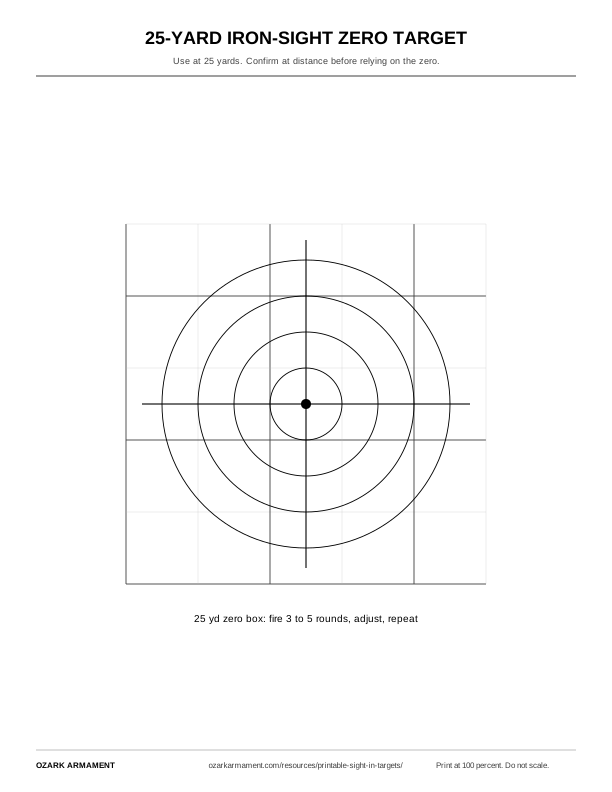
25-Yard Iron-Sight Zero Target
Best for carbine iron sight sessions at a 25-yard bay.
Includes a centered aiming mark, bold crosshair, concentric rings, and a true one-inch grid for fast windage and elevation calls.
.png&w=1920&q=75)
Free printable target pack
Download eight clean US Letter PDF targets for AR-15 iron sights, red dots, scopes, dry alignment checks, dot drills, and range logs. Every file is static, print-ready, and built to use at 100 percent scale.
ARTICLE WRITTEN BY Matt Rice
8 PDFs
US Letter size
Static downloads
No sign-up
These files are designed for regular 8.5 by 11 inch paper. Set your print dialog to actual size or 100 percent, then verify scale with the reference marks before using a target for sight adjustments.
Best for carbine iron sight sessions at a 25-yard bay.
Includes a centered aiming mark, bold crosshair, concentric rings, and a true one-inch grid for fast windage and elevation calls.
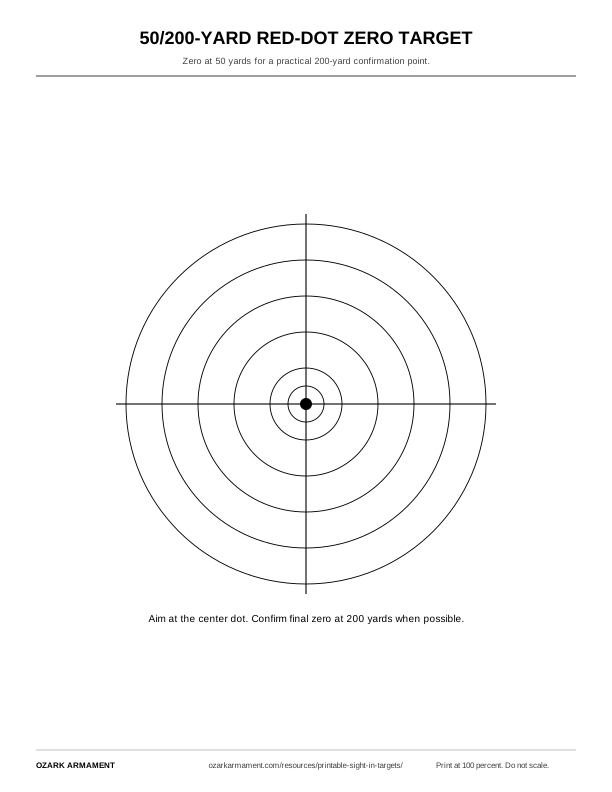
Best for a practical red dot zero on a 5.56 AR-15.
Aim at the center dot to set a 50-yard zero, then confirm your actual point of impact near 200 yards with your own rifle and load.
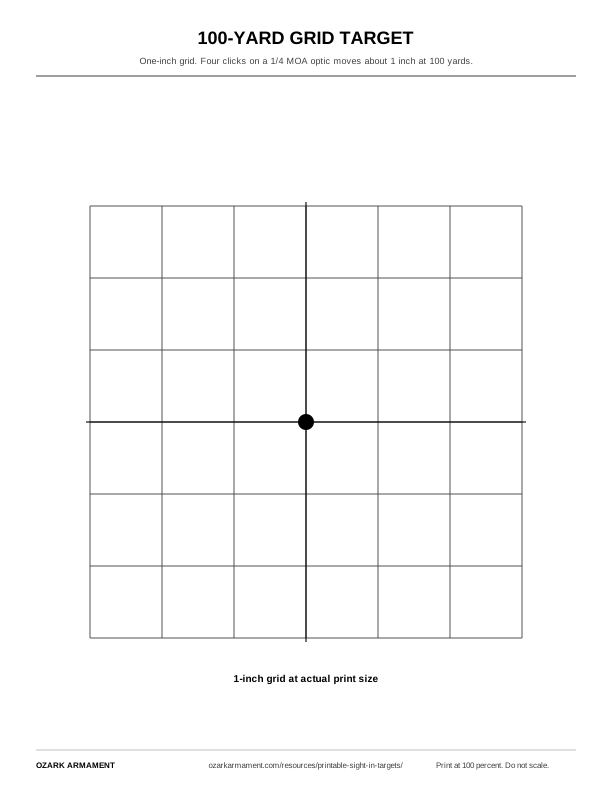
Best for scope, prism, and precise iron sight confirmation.
The one-inch grid makes it easy to translate a group center into 1/4 MOA click corrections at 100 yards.
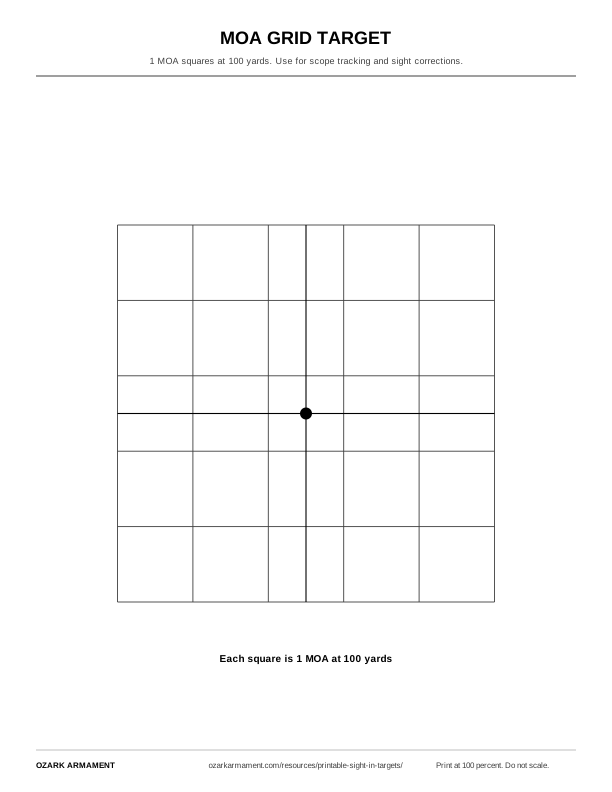
Best for optic tracking checks and MOA-based adjustments.
Each square is sized to one MOA at 100 yards, with a clean center reference for dialing and return-to-zero drills.
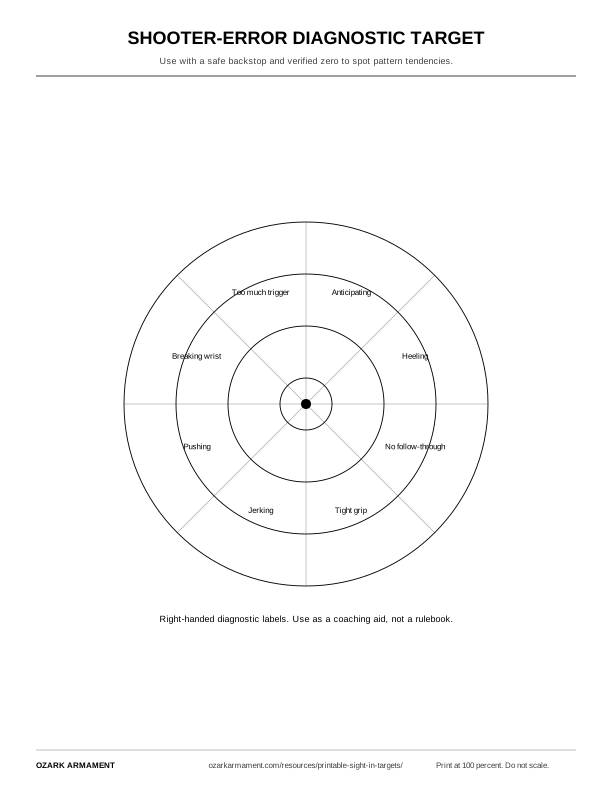
Best for coaching, dry practice review, and grouping analysis.
Right-handed diagnostic notes help identify common pattern tendencies after you have already confirmed the rifle zero.
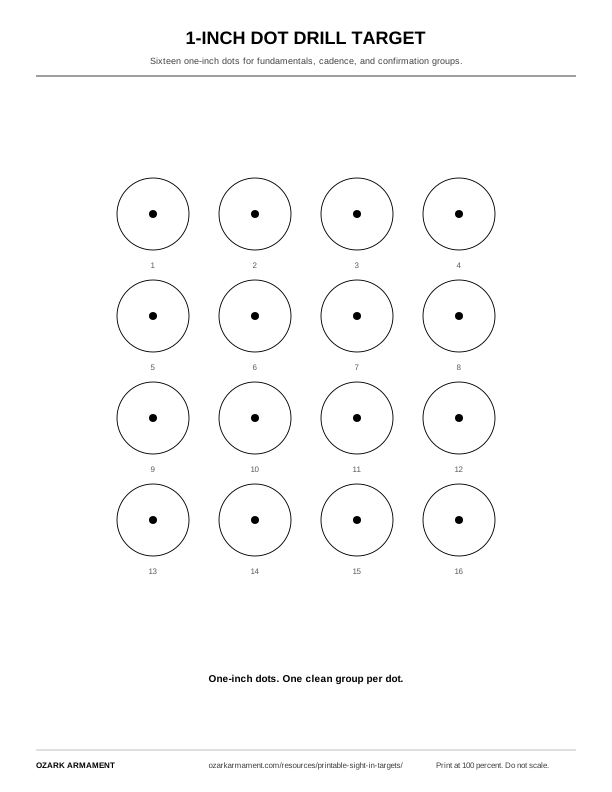
Best for fundamentals, cadence, and repeatable practice strings.
Sixteen one-inch dots give you plenty of clean aiming points on one sheet without using extra paper.
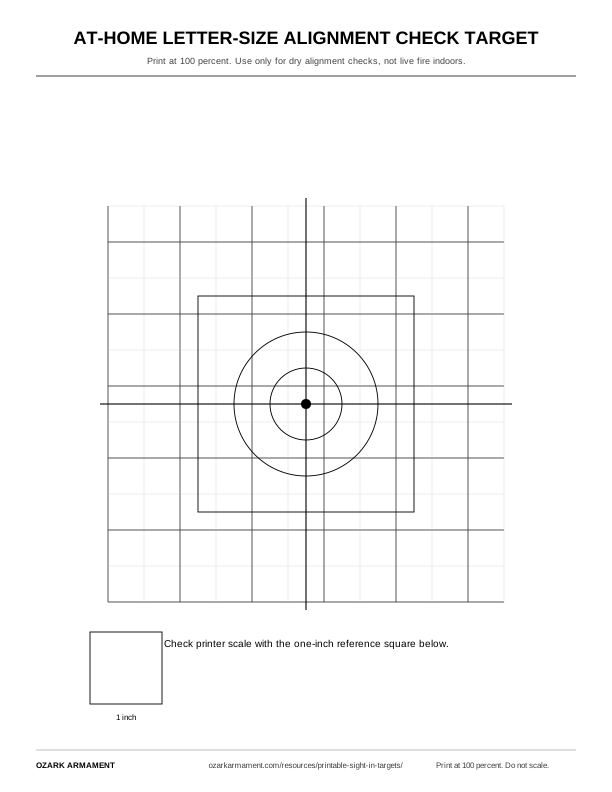
Best for safe dry alignment checks before a live-fire range trip.
Includes a printer scale box, bold grid, and center reference. Use it only with an unloaded firearm and no live ammunition present.
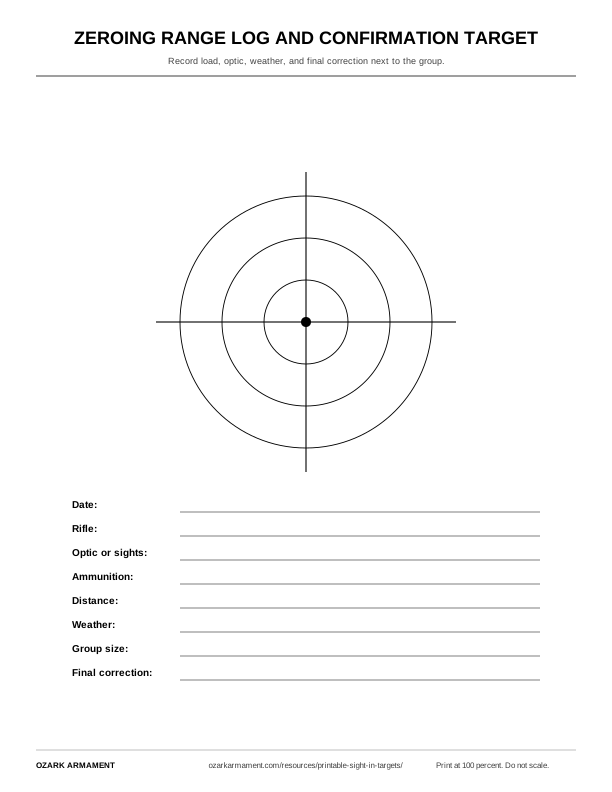
Best for recording the zero that actually worked.
Combines a confirmation bullseye with fields for rifle, optic, ammunition, distance, weather, group size, and final correction.
Quick zero process
The target helps you measure and record. Your final zero still depends on your rifle, ammunition, optic height, shooter position, and range conditions.
Print at 100 percent on US Letter paper. Do not fit to page or scale to margins.
Start with a stable bench, safe backstop, known distance, and the correct target for your sight system.
Fire a careful 3 to 5 shot group at the center aiming point. Measure the group center, not the best single hole.
Adjust windage and elevation according to your sight or optic clicks, then repeat until the group center matches your desired point of impact.
Confirm at your real use distance. A 50-yard red dot zero should still be checked near 200 yards when you have access to that range.
Use the PDF versions for printing. Browser previews and SVG thumbnails are included for quick browsing, but the PDF files are the printable source. If the one-inch reference does not measure correctly with a ruler, check your printer scaling settings before making sight adjustments.
Keep targets flat, staple all corners, and mark each group before changing your sights. A simple range log prevents chasing old holes after multiple adjustment cycles.
Q: What distance should I zero my AR-15 at?
A: The two most common choices are a 50 yard zero, which for common 5.56 loads gives a second close point of impact near 200 yards, and a simple 100 yard zero. The right pick depends on your barrel length, ammunition, optic height, and how you use the rifle. Choose one, confirm it at distance, and write it on the range log target.
Q: Is it better to zero at 50, 100, or 200 yards?
A: Each option has tradeoffs. A 50 yard zero keeps the point of aim relatively flat out to roughly 200 yards for common 5.56 loads, which is why it is popular with red dots. A 100 yard zero is easy to confirm and to build holdovers from. There is no single best zero, so match it to the distance you shoot most.
Q: Is a 25 yard zero the same as a 100 yard zero?
A: Not exactly. A 25 yard target can get you on paper and roughly approximate a longer zero, but a true 25 yard zero and a true 100 yard zero are not identical because the bullet path crosses the line of sight at more than one distance. Always confirm the final zero at your real distance before relying on it.
Q: How do I print these targets at the correct size?
A: Set your print dialog to actual size or 100 percent and turn off fit to page or scale to margins. After printing, measure the one inch reference square or grid with a ruler. If it does not measure correctly, fix your printer scaling before using the target for sight adjustments.
Q: Do these targets cost anything or require an email?
A: No. All eight targets are free to download and print, and the links are direct PDF files with no email or sign up required.
Q: What is the best target for zeroing a red dot?
A: Use a target with a clear center aiming point and a fine reference grid so you can measure the center of your group and convert it into click adjustments. The 50/200 yard red dot target and the 25 yard iron sight target in this pack are both built for that.
★★★★★ 4,000+ 5-star reviews · NO B.S. Lifetime Warranty
No minimum, no expiry, on everything we make. Drop your email and your code shows up right here, instantly. Plus new-drop alerts and zero-BS AR-15 tips.
No spam. Unsubscribe anytime.